
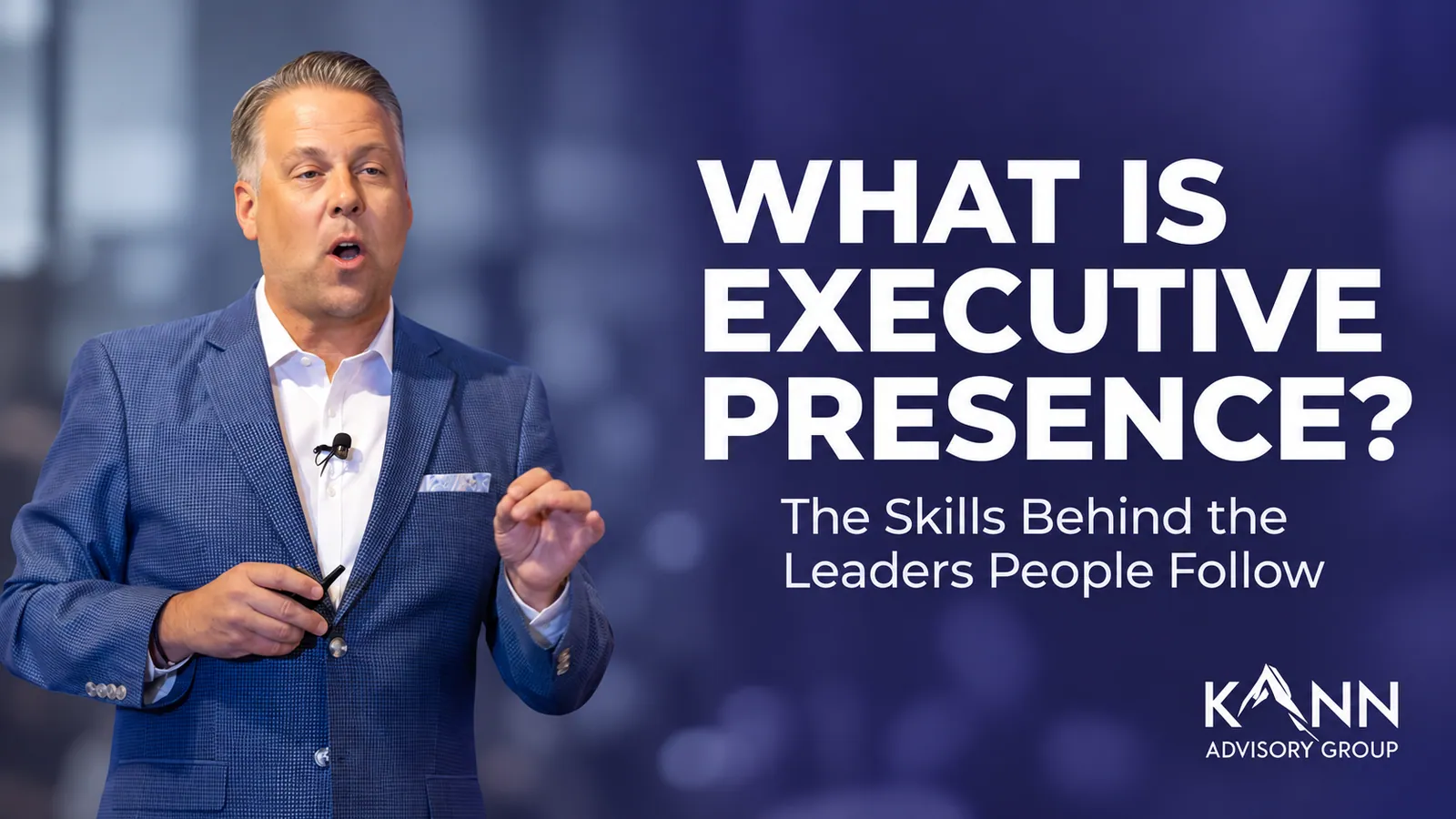
You’ve seen it. A leader walks into a meeting that is already running late, says two sentences, and the whole room recalibrates. Nobody announced a promotion. Nobody read a résumé. Something in how that person showed up told everyone to pay attention.
That something has a name. Executive presence. And here is the good news I have been sharing with leaders for a decade: it is not a gift you are born with. It is a set of skills. Skills can be learned.
What is executive presence?
Executive presence is the ability to project confidence, clarity, and credibility so that people trust you, follow you, and remember what you said. It shows up before you speak, in how you enter a room and carry yourself. Then it is confirmed, or quietly taken away, the moment you open your mouth.
It is not a title. I have known people in corner offices who could not hold a room for thirty seconds and people with no title at all who owned it in ten. The difference was never rank. It was presence.
Why does executive presence matter more than ever?
Because your audience has never had more ways to tune you out. Every meeting competes with a phone. Every presentation competes with the inbox that opened in another window. On live television, the viewer can change the channel with one thumb. In your next town hall, they can do the same thing without ever leaving their seat.
The leaders who get heard are not always the smartest people in the room. They are the clearest. They say less and mean more and people remember it.
What are the core skills of executive presence?
After 17 years hosting live television on Golf Channel and five years as Chief Communications Officer of the LPGA, I have come to believe it comes down to three things you control.
- The message. What do you want people to remember, repeat, and feel? We call it the Power 3. If you cannot say your three in under a minute, the room will not either.
- The delivery. Voice, pace, eye contact, and stillness. And the pivot: answer the hard question straight and then bring the conversation back to your point. Dodging costs you the room. Pivoting earns it.
- The story. People do not follow data. They follow people. The leaders with real presence can tell the story of how they lead in two minutes, the same way, every time. That is what we call the book on you.
Can executive presence be learned?
Yes. I am living proof. Early in my broadcasting career I had a stretch where nerves got the best of me on air. I knew the material cold. What I had not learned yet was how to stop performing and start communicating. That shift changed everything and it is the same shift I watch leaders make in our coaching sessions and workshops.
It does not take a personality transplant. It takes practice out loud, honest feedback, and a clear idea of what you want people to take away.
How do you build executive presence? Start here
You do not need a program to start. You need three habits.
- Write your Power 3. Before your next big meeting, put the three things you want remembered on an index card. If a slide or a talking point does not serve one of them, cut it.
- Record yourself for two minutes. Watch it once. Notice your pace, your filler words, and where your energy drops. Then do it again.
- Rehearse the pivot. Write down the question you hope nobody asks. Write the straight answer. Then write the one sentence that brings you back to your message.
Do those three things for a month and people will notice. They may not know what changed. They will know they are listening.
When is coaching worth it?
When the stakes go up. A bigger role, a board seat, a client you cannot afford to lose, a first all-hands as the new leader. That is when an outside eye pays for itself.
Our Elevate Coaching program works one on one, over six or nine sessions, on exactly these skills, built around the rooms you actually walk into. For teams that need to sound like one organization, the Elevate Workshop brings the same approach to everyone at once.
I’ll leave you with this…. Presence is not about being the loudest person in the room. It is about being the one people remember when the meeting is over.
Remember This: People follow presence before they follow a title. Build the presence and the title takes care of itself.
Keep reading
- Executive PresenceLessons in Leadership: What Bill Parcells Taught Me About Winning in Business and Life – Dave Shore
- Executive PresenceBecome the Meeting Maestro: Keys to Owning the Room – Kraig Kann
- Executive PresenceThe Humble Brag Paradox: How to Own Your Wins Without Being Cringe – Ashleigh Guerra
Explore Peak Perspectives by topic
Public Speaking (13)Executive Presence (10)News & Alumni (7)Leadership Communication (7)Brand Storytelling (4)